Get-CimInstance Class Win32_OperatingSystem example, listing Version, Name and ProductType
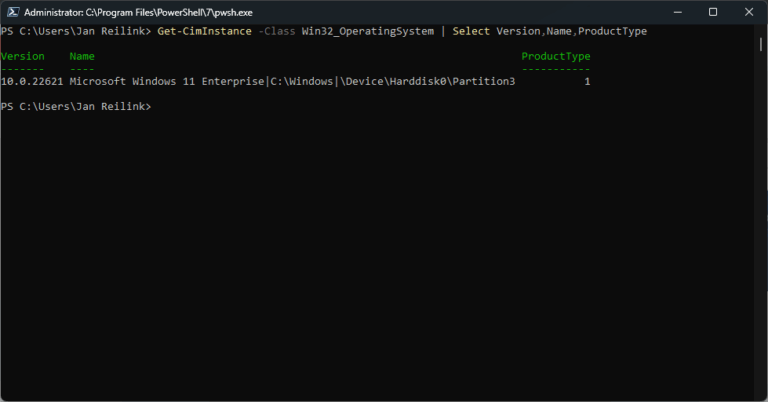
Get-CimInstance Class Win32_OperatingSystem example, listing Version, Name and ProductType

Get-CimInstance Class Win32_OperatingSystem example, listing Version, Name and ProductType

...you want (and select them to avoid empty values): Get-CimInstance -EA SilentlyContinue ` -Query "select * from Win32_PerfRawData_W3SVC_WebService" ` -Namespace root\cimv2 ` | Select-Object Name,CurrentConnections Get-CimInstance -EA SilentlyContinue ` -Query...
...are deprecated. See Breaking Changes for PowerShell 6.x. You now have to use CIM (aka WIM v2), like for example Get-CimInstance: PS C:\Users\Jan Reilink> Get-CimInstance -Class Win32_OperatingSystem | Select Version,Name,ProductType...

...VMs: Get-WmiObject -ComputerName hyper-v_host -Namespace root\virtualization\v2 -class Msvm_VirtualSystemSettingData | select elementname, BIOSSerialNumber Or use Get-CimInstance: Get-CimInstance -ComputerName hyper-v_host -Namespace root\virtualization\v2 -class Msvm_VirtualSystemSettingData | select elementname, BIOSSerialNumber The output is of...
...= (Get-CimInstance -EA SilentlyContinue -Query "select * from Win32_PerfRawData_W3SVC_WebService" -Namespace root\cimv2).Name # Get all Win32_PerfRawData_W3SVC_WebService properties for all websites $allwebsiteinfo = Get-CimInstance -EA SilentlyContinue -Query "select * from Win32_PerfRawData_W3SVC_WebService" -Namespace...
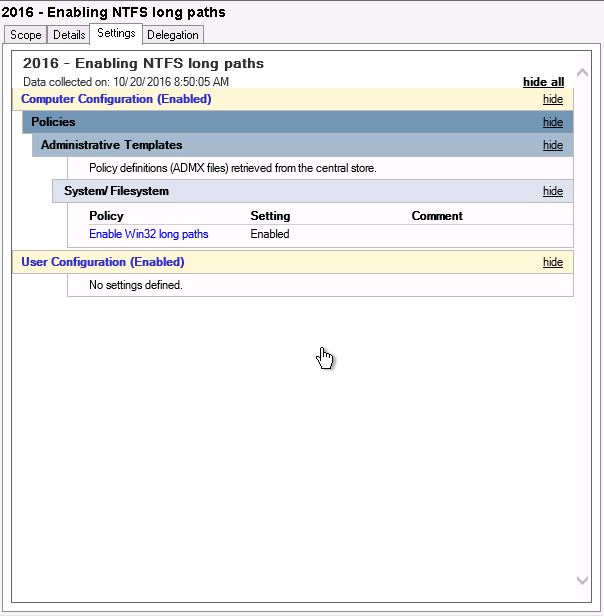
...Server 2016 build is 10.0.14393 [version]"10.0.14393" [version] $winver = $(Get-CimInstance -Namespace root\cimv2 -Query "SELECT Version FROM Win32_OperatingSystem").Version if($winver -ge [version]"10.0.14393") { if ($(Test-RegistryValue "HKLM:System\CurrentControlSet\Control\FileSystem" LongPathsEnabled) -eq $false) { New-ItemProperty -Path...
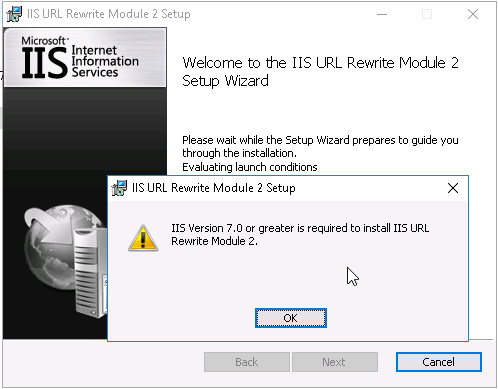
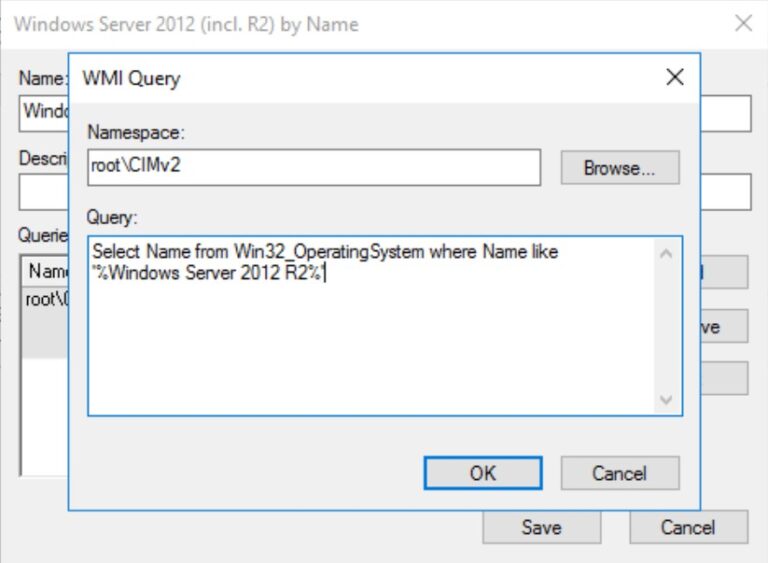
..."10.0")) { Write-Host "Windows Server 2016" } Or use WMI/CIM’s Win32_OperatingSystem class, for example: (Get-CimInstance -class Win32_OperatingSystem).Caption This’ll return something like Microsoft Windows Server 2016 Standard. WMI Filters for Group...