Install Windows Server Servicing Stack Updates (SSU) using PowerShell
Install Servicing Stack Updates (SSU) for Windows Server 2012R2, 2016 and Windows Server 2019 using PowerShell, without downtime.

Install Servicing Stack Updates (SSU) for Windows Server 2012R2, 2016 and Windows Server 2019 using PowerShell, without downtime.
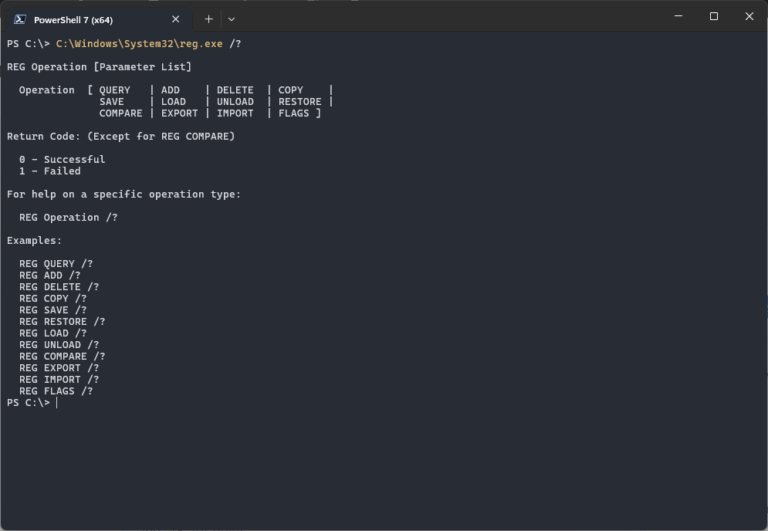
Learn how to silently import a .reg file into your Windows Registry. This neat regedit trick comes in handy quite often. The regedit command is valid for Windows 11, 10, Windows Server 2022, 2019 and older.

A manual SQL Server failover can only be initiated from the principal server, and the mirrored database must be synchronized (that is, when the database is in the SYNCHRONIZED state). In this article I will show you how to manual failover mirrored SQL Server databases using Transact-SQL (T-SQL) in SQL Server 2017 and up.

3 unique methods to list Service Principal Names (SPNs) in your Windows network quickly using PowerShell. An SPN or Service Principal Name is a unique identity for a service, mapped with a specific account (mostly service account).
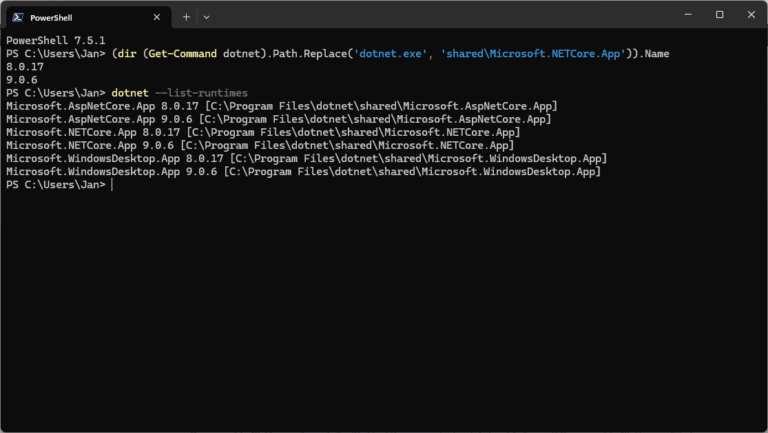
Users can install and run multiple .NET Framework versions on their computers. When you develop or deploy your app, you might need to know which .NET versions are installed on a machine and here is how to check the .NET version.
Compressed SQL Server backups can be verified in PowerShell using a handy PowerShell function. This comes in handy when you need to verify if existing SQL Server backups are compressed.

Unzip a file on your PowerShell command-prompt may come in handy sometimes, even on your Windows 11/10 workstation. Use Expand-Archive for this, and all that is required is PowerShell 5.0+, or the .NET 4.5+ Framework to use System.IO.Compression.ZipFile.
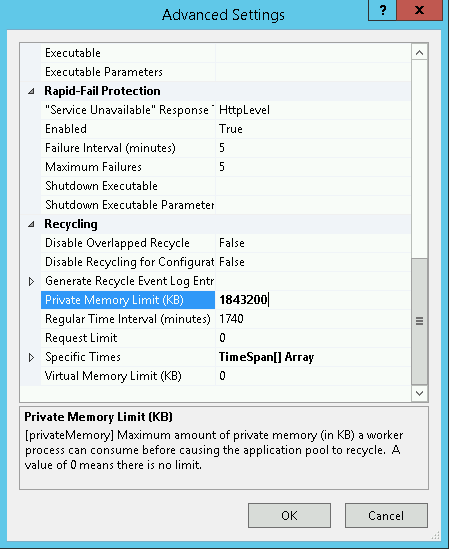
WSUSPool keeps stopping? Sometimes you find your WSUS server keeps crashing over and over again. The WSUS application pool periodically stops, WSUS is unavailable and/or the WSUS management console hangs.

It is urged you disable SMBv1 in your Windows variant (Windows 10, 8.1, Server 2016, 2012 R2), and here is how if you haven't done so yet.
Being able to detect the ethernet network speed using PowerShell or WMI is perfect for Windows Server Core. If you ever need to lookup the speed of your ethernet network card in Windows, on the command-prompt, use one of the following PowerShell / WMIC commands.

In this post I provide you with 5 ways to cleanup files and free up disk space in Windows Server 2016 (and older / newer Windows Server version), without using the Disk Cleanup Utility. Reclaim lots of lost gigabytes easy. Disk space usage is still an issue in Windows Server.
You sometimes need to list and get all MAC addresses of all Hyper-V virtual machines in your network. Either for your Hyper-V administration or provisioning if you don't set an unique MAC address automatically. Here is how to get all those MAC addresses easily with PowerShell.
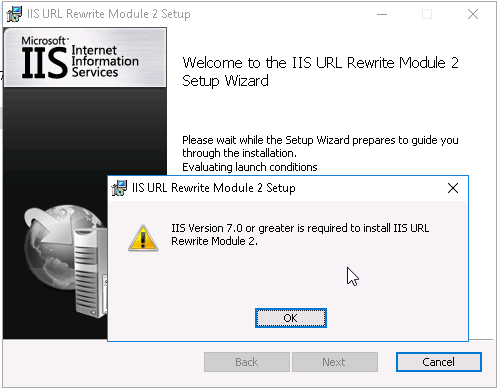
When you start to play with Windows Server 2016 and IIS 10, you'll get an error when you try to install the IIS URL Rewrite Module in IIS. The error occurs because the URL Rewrite Module installer contains an invalid version check for the IIS being used. Here is how to install IIS URL Rewrite Module 2 in IIS 10...
Blacklist check script written in PowerShell, to easily lookup an IP address status in various blacklists (DNSBLs, RBLs)

The AppCmd.exe command is your one-stop-shop for administering Windows Server IIS web servers. In combination with WinRM it is your Swiss Army knife for your daily routine. This post introduces appcmd and provides you with a lot of helpful appcmd…
Get the current number of active FTP client connections on your Windows Server IIS FTP Service using the Get-Counter cmdlet and the Microsoft FTP Service Current NonAnonymous Users performance counter.
Windows PowerShell is an important tool in Windows Server for administrators. You can use PowerShell for Windows Server administration, software installation, automation, and shell/command-prompt scripting.

Regular maintenance of a Windows computer significantly improves performance and reliability. Manual execution of maintenance tasks complements the automatic maintenance already scheduled by Windows, giving users greater control over how system resources are managed and how repairs are conducted. This article explains how to use tools such as SFC, DISM, CHKDSK, and disk defragmentation.

OpenSSL comes in handy when you need to generate passwords or random strings. For example for system accounts and services. In this short post I'll give you a quick example on how to generate random passwords with OpenSSL in Linux (Bash), Windows and PHP.
Here is how you can verify whether an external command in PowerShell was executed successfully or not by checking its errorlevel. Simply by verifying the PowerShell exit code using the $? operator or $LASTEXITCODE.